
The right brace keeps the arm ready to move.
Neurosuite occupational therapists select, fit and train clients in upper limb orthoses (braces) for the arm, wrist and hand. Our clinicians are trained with dynamic systems such as SaeboReach, Dynasplint and Ultraflex, and we choose each brace around your goals, your tone and your daily routine.
Neuromuscular re-education retrains how your brain and muscles work together, using task-specific practice in real activities.
Why an arm brace matters
What does an arm brace do?
- Helps maintain joint range of motion in the elbow, wrist and fingers
- Lowers the chance of contractures, the permanent tightening of muscles and joints
- Supports better hand and arm position for daily tasks
- Can reduce discomfort from tight or stiff joints
- Keeps the arm ready for active therapy and new movement
Dynamic vs static: why it matters after a neurological injury
How is a dynamic orthosis different from a static splint?
A static splint holds a joint in one fixed position, while a dynamic orthosis still allows movement. Many general rehab settings use static splints. Neuro clients often benefit more from dynamic orthoses.
Static splint
- Holds the joint still in one position
- Useful for rest and protection
- Does not let the joint move, so it does not train movement
- Can be hard to tolerate when tone pushes against it
Dynamic orthosis
- Applies gentle, adjustable, sustained positioning over a long period while still allowing movement
- Can be adjusted as range improves
- Some, like SaeboReach, assist opening the hand so you can practice grasp and release in real tasks
- Works with spasticity rather than simply fighting it
Your therapist decides with you and your physician which type fits best, and adjusts the plan as you progress.
Systems we train with
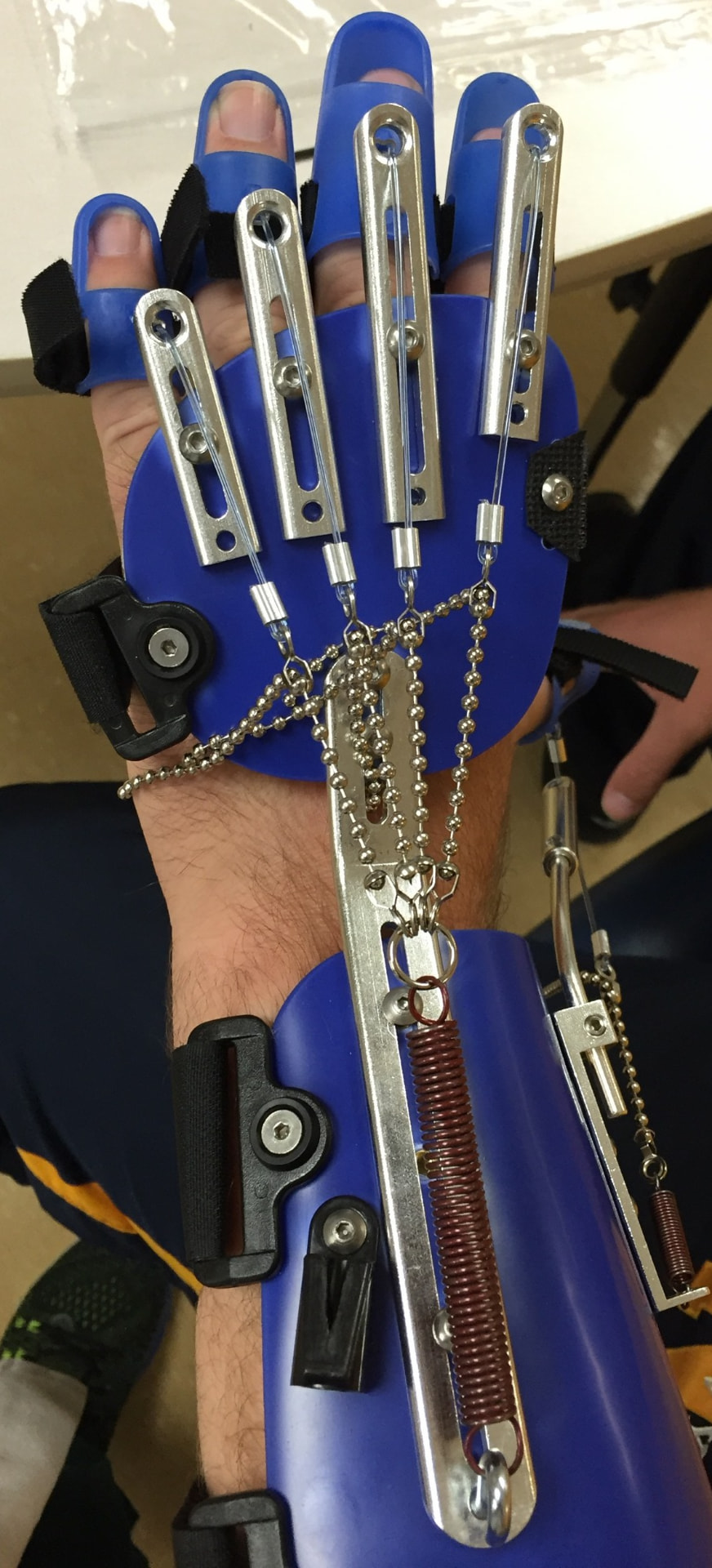
SaeboReach
A dynamic hand orthosis that assists finger extension for functional grasp and release practice.
Dynasplint
Gentle, adjustable sustained positioning to support joint range of motion.
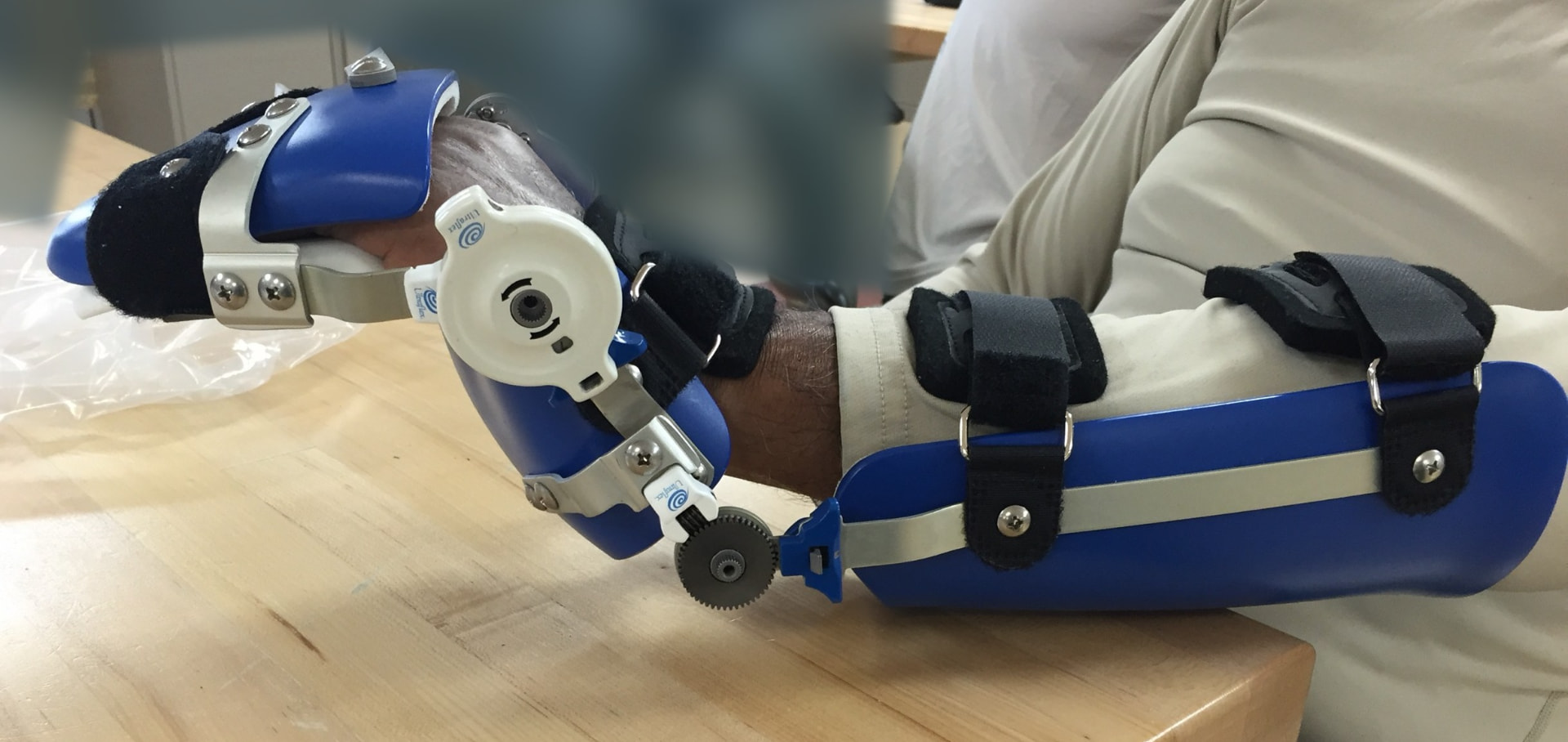
Ultraflex
Adjustable dynamic orthoses for the elbow, wrist and hand that provide gentle, adjustable sustained positioning to support joint range of motion.


Product names are trademarks of their respective owners. Neurosuite is independent and does not sell braces.
What training includes
- Putting the brace on and off safely
- Wearing schedule and skin checks
- Adjusting tension as directed
- Caregiver training
- Using the brace during real tasks
Frequently Asked Questions
Why would I need an arm brace after a neurological injury?
A brace helps maintain joint range of motion in the elbow, wrist and fingers, lowers the chance of contractures, supports better hand and arm position for daily tasks, can reduce discomfort from tight or stiff joints, and keeps the arm ready for active therapy and new movement.
Do I need a dynamic or static splint after a stroke?
A static splint holds a joint still in one position and is useful for rest and protection, while a dynamic orthosis provides gentle, adjustable, sustained positioning over time and still allows movement, which often suits arms with tone or spasticity after a stroke. Your therapist decides with you and your physician which type fits best, and adjusts the plan as you progress.
Which braces do you train with?
Our clinicians are trained with dynamic systems such as SaeboReach, Dynasplint and Ultraflex, and we choose each brace around your goals, your tone and your daily routine. Neurosuite is independent and does not sell braces.
What does orthotics training include?
Putting the brace on and off safely, a wearing schedule and skin checks, adjusting tension as directed, caregiver training, and using the brace during real tasks.
The next destination on your road to recovery.
Tell us your goals. We'll take it from there.